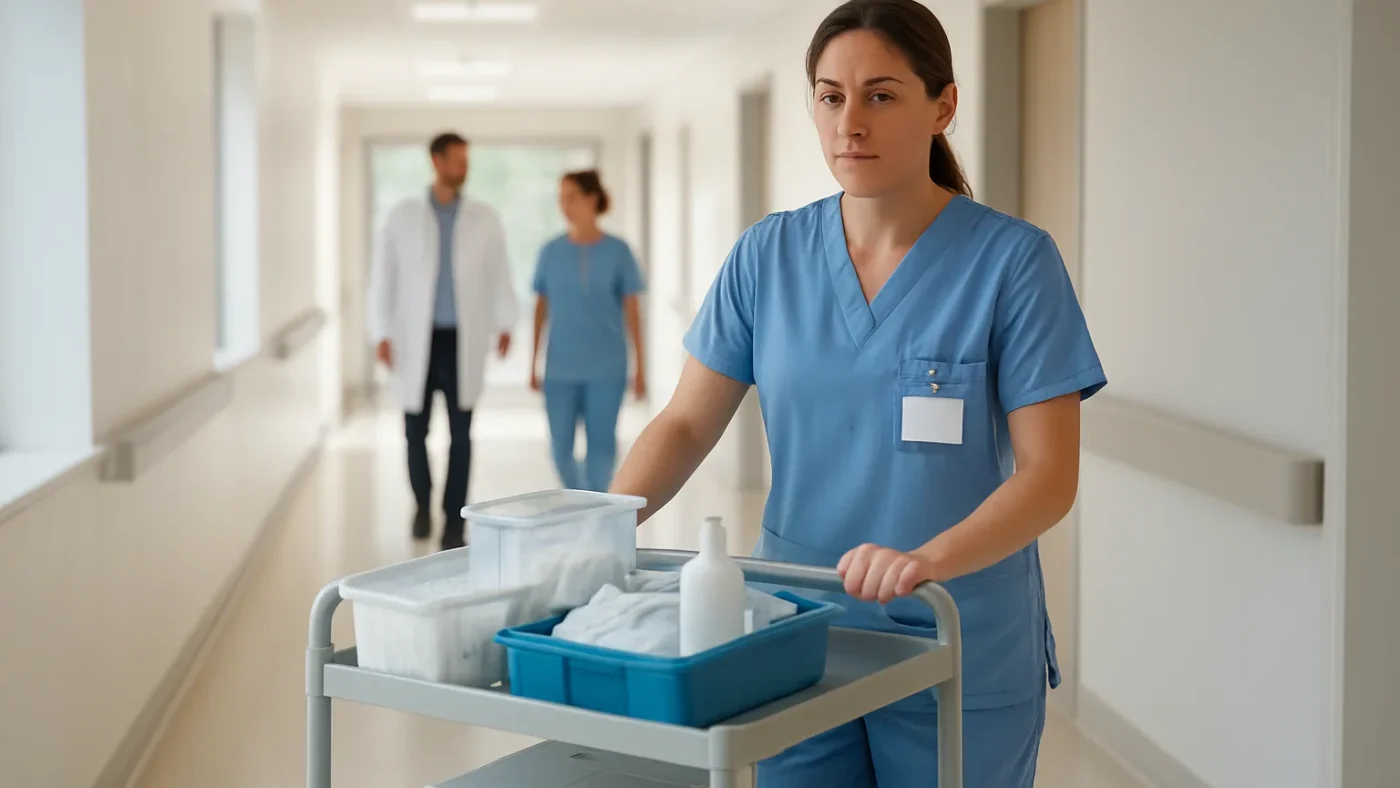
If you want to work in a hospital but do not have a medical degree, you have more options than you may think. Hospitals need nurses, doctors, and technicians, but they also rely on a large support workforce to keep buildings clean, meals delivered, supplies stocked, patients moving safely, phones answered, and records organized.
Many hospital jobs may not require a medical degree. Some can be accessible to applicants with a high school diploma, customer service experience, warehouse experience, office skills, or a willingness to complete employer-provided training. Requirements vary widely by role, hospital, state, and department, so the official job posting is always the place to confirm what is required.
What counts as a non-clinical hospital job?
Non-clinical work supports patient care without diagnosing, treating, or prescribing. These employees may work near patients and medical staff, but they are not performing the duties of a licensed clinician.
That distinction matters. A job title that sounds entry-level may still involve safety training, a background check, health screening, vaccination documentation, a physical ability assessment, or a specific certificate. Other roles may be more office-based and focus on scheduling, communication, billing, or records. Read the duties and qualifications separately before deciding whether a job fits your background.
Hospital jobs no degree seekers may want to explore
Environmental services and housekeeping
Environmental services workers clean and disinfect patient rooms, waiting areas, offices, restrooms, and other parts of a hospital. This work is central to infection prevention and patient safety. Shifts can include evenings, nights, weekends, or holidays because hospitals operate around the clock.
Employers may look for reliability, attention to detail, the ability to follow cleaning procedures, and comfort being on your feet. Experience in cleaning, hotels, schools, retail, or custodial work can be relevant. A medical degree is generally not the focus for this kind of role, but training on hospital procedures is common.
Food service and dietary support
Hospital kitchens need people to prepare trays, wash dishes, stock food areas, transport meals, and serve visitors or staff. Dietary departments must follow instructions closely because some patients have medically ordered meal plans.
Food service experience can help, but some positions may train people who are new to the field. Expect employers to care about sanitation, punctuality, teamwork, and the ability to follow directions. Jobs involving food preparation may have local food-safety requirements, so check the individual posting.
Patient transport
Patient transporters help move patients between rooms, testing areas, treatment departments, and discharge locations. The job may involve wheelchairs, stretchers, communication with unit staff, and careful attention to patient privacy and comfort.
This is a patient-facing support role rather than a clinical role, but it can be physically demanding. Some hospitals may require training in safe lifting, transfer procedures, or basic life support. Do not assume every transporter role has the same requirements; compare listings closely.
Reception, registration, and scheduling
Front-desk and administrative workers are often the first people patients and visitors meet. Depending on the department, duties may include greeting people, checking them in, answering phones, entering information, scheduling appointments, confirming paperwork, and directing visitors.
These roles often value customer service, basic computer skills, accuracy, calm communication, and discretion. Previous work in retail, call centers, hotels, schools, or offices can help show those skills. Because hospital staff handle private information, employers may also provide training on confidentiality and records procedures.
Unit clerks and department assistants
Unit clerks, ward clerks, and department assistants help clinical teams stay organized. Their work can include answering calls, maintaining charts or electronic records, coordinating messages, ordering supplies, and handling routine paperwork.
Job titles and qualifications vary a great deal. Some employers may prefer medical terminology, prior office experience, or a relevant certificate, while others may train an applicant who has strong administrative skills. Look beyond the title and focus on the daily duties.
Materials management and supply roles
Hospitals use a constant flow of gloves, linens, cleaning supplies, equipment, office materials, and other items. Supply and materials workers may receive deliveries, organize inventory, restock departments, move carts, and keep track of items.
People with stockroom, retail backroom, delivery, or warehouse experience may recognize much of this work. It can involve lifting, walking long distances, and working with inventory systems. If this type of work appeals to you, our guide to warehouse jobs near you and their requirements can help you identify transferable skills for your resume.
Security, parking, and visitor services
Hospitals may employ or contract with workers who support building security, parking operations, patient escorts, information desks, and visitor access. These roles can require strong judgment, a professional demeanor, and the ability to stay calm during stressful interactions.
Security positions may have additional licensing, training, or experience standards depending on the employer and location. Parking and visitor service jobs can be more customer-service focused, but schedules may include nontraditional hours.
Maintenance, laundry, and facilities work
Facilities teams maintain the physical building and essential services. Entry-level support work may include laundry, waste handling, grounds work, basic maintenance assistance, or moving furniture and equipment. Skilled trades positions, such as electrical or HVAC work, can require licenses or formal experience.
These jobs are a reminder that “no medical degree” does not mean “no qualifications.” A role may be open to people without college but still require physical ability, safety knowledge, a driver’s license, or trade experience.
How to tell whether a hospital role fits your background
Start with the minimum qualifications, not just the job title. Look for language such as “required,” “preferred,” “training provided,” or “equivalent experience.” Required qualifications are the ones you should be prepared to meet before applying. Preferred qualifications can still be worth addressing in your resume if you have related experience.
- Match your past work to the tasks listed, including cleaning, stocking, customer service, data entry, food preparation, scheduling, driving, or handling equipment.
- Highlight reliability, attendance, safety awareness, teamwork, and communication. These are useful in nearly every hospital department.
- Be honest about credentials. Do not imply that you hold a license, certification, or clinical training that you do not have.
- Check whether the job is an employee position or is staffed by a separate contractor. Food service, security, housekeeping, and facilities work may sometimes be handled by outside companies.
- Consider the schedule before applying. A hospital role may require early mornings, overnights, weekends, holidays, or rotating shifts.
If you are building a resume from limited experience, use clear examples rather than broad claims. For instance, a retail worker can describe resolving customer questions, balancing competing tasks, keeping a work area organized, and following safety procedures. See our guide on how to write a resume for entry-level jobs for a practical way to turn those experiences into stronger application language.
Where to look for legitimate hospital opportunities
The safest place to begin is the official careers page for a hospital system, local hospital, medical center, rehabilitation facility, or affiliated clinic you are interested in. Search by location and use terms such as “environmental services,” “food service,” “patient transporter,” “registration,” “unit clerk,” “materials,” “guest services,” or “facilities.”
You can also use established job boards, but verify any listing by finding the same role on the employer’s official careers site before sharing personal information. A legitimate employer should be able to explain the job duties, hiring process, and whether the role is directly employed by the hospital or by a contractor.
Watch for warning signs: requests to pay for a job, pressure to share sensitive financial information before a verified offer, vague job descriptions, or a recruiter using an email address that does not match the organization. Our guide to finding legitimate job openings near you offers more steps for checking a posting before you apply.
Prepare for the hospital hiring process
Hospital applications often ask for work history, education, availability, and authorization to work. Some roles may include an online assessment, phone screen, interview, background check, health-related onboarding steps, or a physical-capacity review. The exact process depends on the position and employer.
At an interview, expect questions about attendance, customer service, working under pressure, handling confidential information, following procedures, and dealing respectfully with people who may be worried or unwell. Prepare a few short examples from work, school, volunteering, or caregiving that show how you solve problems and communicate clearly. You can practice with these common job interview questions and preparation tips.
Frequently asked questions
Do hospital jobs require a medical degree?
Many do not. Non-clinical departments need workers in housekeeping, food service, administration, supply, facilities, visitor support, and other operational areas. Individual positions can still require training, experience, a certificate, or screening steps, so verify the posting.
Can an entry-level job lead to other hospital work?
It may provide useful experience with workplace safety, customer service, scheduling, records, or hospital operations. Whether it leads to advancement depends on the employer, your performance, available internal opportunities, and any qualifications required for the next role. Treat it as a chance to build relevant skills, not as a promise of promotion.
Are hospital support jobs only for people with healthcare experience?
No. Employers may consider experience from restaurants, retail, offices, warehouses, hotels, schools, cleaning services, and other settings. The best application shows how your existing skills match the responsibilities of the specific job.
Your next step
Pick two or three hospital support roles that fit your strengths, then search official local hospital career pages using the job-title keywords above. Read the minimum qualifications carefully, tailor your resume to the duties, and apply only through a verified source. A hospital may offer more paths into steady, practical work than the clinical roles you first notice.